
Marrakech
Marrakech is a sensory feast where ancient history and vibrant street life collide. From lush, world-famous gardens to bustling medieval squares, these five spots capture the essence of the "Red City."
Route Ready Travel
3/4/20264 min read


Forget the sweltering desert heat and the winter chill—March is the "Goldilocks" month for Marrakech. As the city wakes up to the sweet scent of blooming orange blossoms, it hits a perfect sweet spot of 23°C days and cool, crisp evenings. With the snowy peaks of the Atlas Mountains still shimmering in the distance and the iconic gardens at their most vibrant, we’re revealing the best ways to experience the "Red City" before the summer crowds arrive. From hidden riad rooftops to the best-kept secrets of the Medina, here is your roadmap to Marrakech in its prime.
Jardin Majorelle
This isn't just a garden; it’s a living piece of art. Originally created by French painter Jacques Majorelle in the 1920s, it’s famous for that specific shade of "Majorelle Blue" that coats the villa and fountains. When Yves Saint Laurent bought the property in the 80s to save it from developers, he turned it into the botanical masterpiece you see today, with plants from all five continents.
In March, the jasmine is starting to bloom, and the towering cacti look incredible against the spring sky. It’s also home to the Pierre Bergé Museum of Berber Arts, which houses some of the most beautiful indigenous jewelry and textiles in North Africa.


Madrasa Ben Youssef


Once the largest Islamic college in North Africa, this place was home to 900 students who lived in tiny, austere dorm cells surrounding a massive, opulent courtyard. It’s a total contrast—the humble living quarters versus the jaw-dropping zellige (mosaic) tilework and carved cedarwood of the common areas.
The central reflecting pool is the "hero shot" for your camera, but take a second to look at the entrance inscription: "You who enter my door, may your highest hopes be exceeded." In the soft March morning light, the shadows hitting the arches are a dream for photographers.
Jemaa el-Fnaa


By day, it’s a wide-open square with orange juice vendors (get the juice, it’s life-changing) and henna artists. But as the sun sets, the "theatre" begins. Hundreds of food stalls roll in, smoke from grilled meats fills the air, and circles of musicians and storytellers form. It’s been a UNESCO site for years because the traditions here haven't changed in centuries.
It’s loud, it’s hectic, and it’s beautiful. If the chaos gets too much, head to a rooftop like Le Grand Balcon du Café Glacier to watch the madness from a safe distance with a mint tea.
Bahia Palace


"Bahia" means brilliance, and this palace was built in the late 19th century to be the most magnificent building of its time. It’s a 2-acre maze of 160 rooms, but the highlight is the Grand Courtyard. It’s paved in Italian Carrara marble and surrounded by a colorful wooden gallery where the Grand Vizier's harem used to reside.
The palace was designed for "pleasure and luxury," meaning every ceiling is hand-painted and every window features stained glass that throws rainbows across the floor in the afternoon. In March, the palace gardens are full of orange trees and hibiscus, making the whole place smell like a spa.
Koutoubia Mosque & Gardens
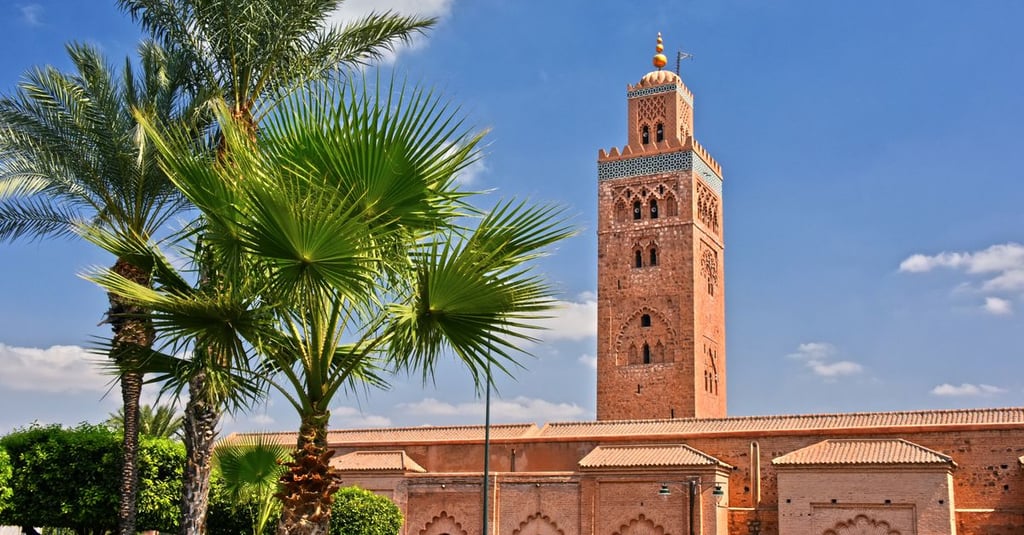
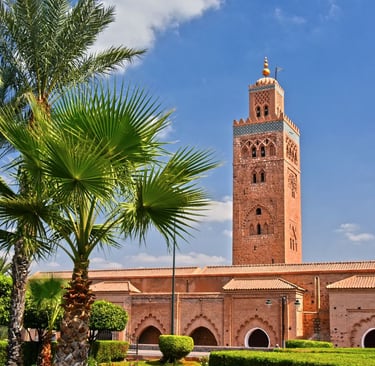
The Koutoubia is to Marrakech what the Eiffel Tower is to Paris. Its 77-meter minaret has stood since the 12th century and is the blueprint for the Giralda in Seville. While the mosque itself is for prayer only, the ruins of the original 1147 mosque are still visible at its base—it was actually demolished because it wasn't perfectly aligned with Mecca!
The real reason to come here in March is the Koutoubia Gardens. It’s the best "escape" in the city center. You can sit on a bench under a palm tree, listen to the call to prayer, and watch the sun set behind the tower.
March hits a "sweet spot" with temperatures around 23°C (73°F). It’s perfect for exploring the 1,000-year-old alleys of the Medina without the summer humidity. In 2026, the end of March also marks the Eid al-Fitr celebrations, meaning you’ll see the city at its most festive as families come together to celebrate after the month of Ramadan.